About this universe
The Grand Inscription is days away, promising a renewal of the city’s sanctified record. Artemis Bane, exiled and infamous for his living tattoos, plots to infect the gathering with a bio-corrupting ink. If he succeeds, every honored scribe will carry Oth-Vael’s true, hideous origin beneath their translucent skin.
Tone
Oppressive and visceral, tinged with desperate defiance and grotesque wonder.
Themes
memory as violence, corruption of truth, alienation, the body as archive
Protagonist

Artemis Bane
Artemis Bane’s presence seethes with restless heat, unsettling in the flickering half-light. His build is wiry, skin intricately inked with pulsing, bioluminescent scripts that shift across scars and grafts. Fused fingertips and haunted eyes betray both his mastery of forbidden inks and the toll of exile. Every motion is tense, purposeful, and edged with risk.
Goal: To infiltrate the ink sanctum and replace the official ink with his bio-corrupting mixture before the Grand Inscription.
How it begins
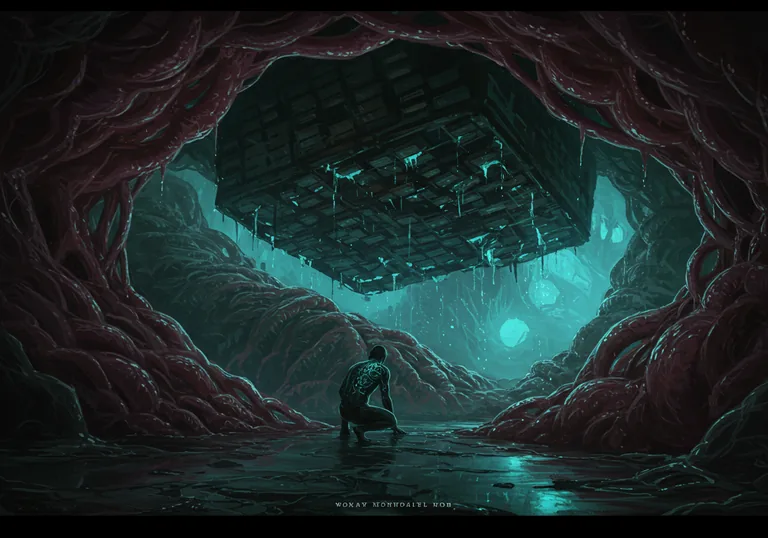
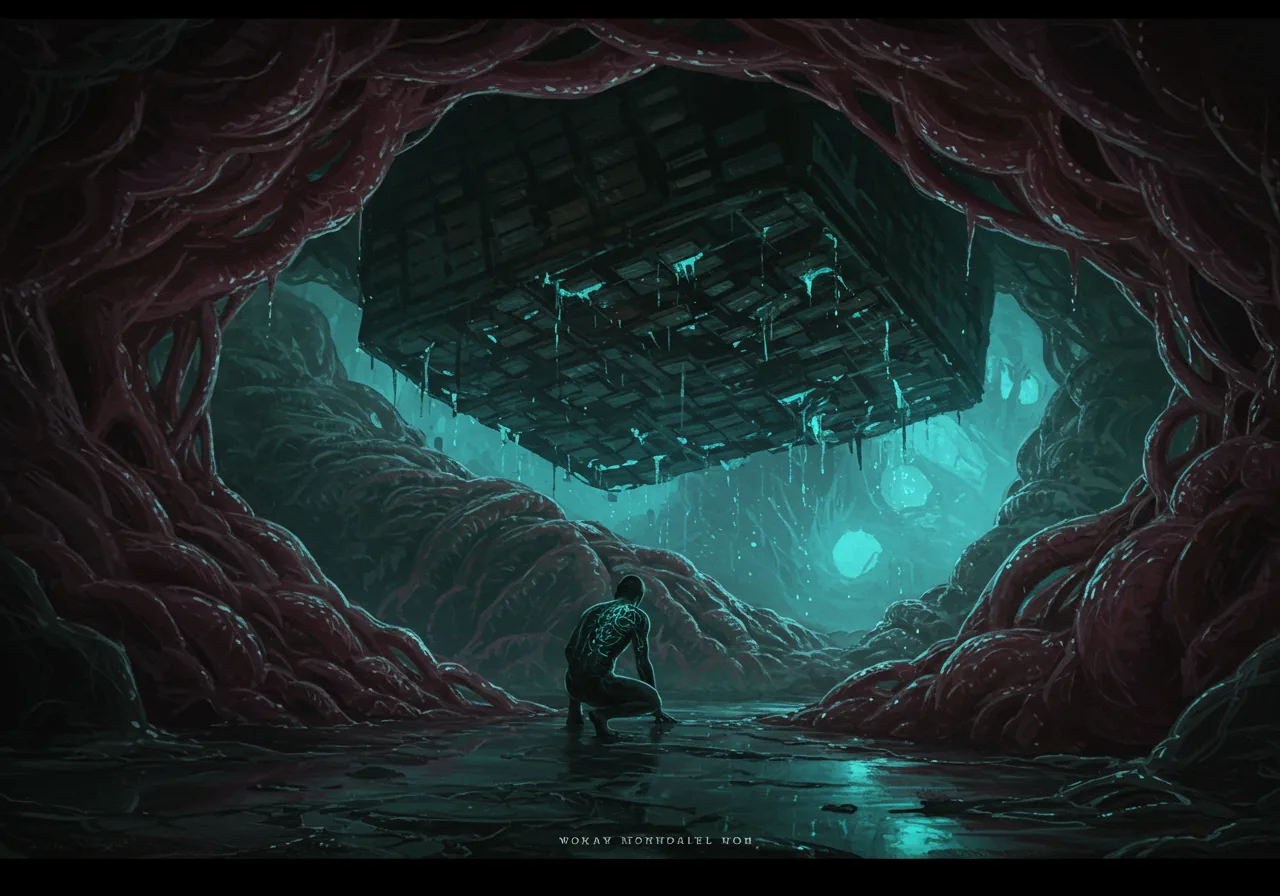
Artemis Bane slithers beneath the flensed floorboards of the Archivum’s eastern wing, clutching a vial of his bio-corrupting ink in one fused hand. Moisture drips in slow, anxious rhythm onto his exposed, map-tattooed back as he listens for the scrape of Scrivener boots overhead. His own fingertips, fused and twitching with shifting glyphs, probe the matrix of living vellum that lines the service passage, searching for the pressure seam that will let him breach the ink sanctum. A muffled cough echoes above, too close. Artemis pauses, breath shallow, feeling heat pulse along his veins. The vial’s glow throbs, reflected in the glistening tissue walls. Above, the footsteps halt, then a familiar voice, dry and almost trembling, hisses through the seams:
“Bane. If you’re down there, move now. Patrol’s rerouted.”
About this world
Oth-Vael sprawls beneath a canopy of dripping, bioengineered towers, its history literally etched into the flesh of its citizens. Society revolves around ritual self-inscription and the maintenance of living archives, overseen by the Silent Scriveners of the Marrow. The Ember-touched, marked by internal fire, are outcasts whose mere presence threatens to ignite the sacred biotext. The city simmers with secrets, both written and withheld, in its weeping corridors.
Oth-Vael is a labyrinthine metropolis, built from weeping, organic towers that ooze bioluminescent ichor, casting the streets in perpetual twilight. The city is an archive in itself, every structure composed of cultivated human-derived vellum, stitched and grown into purpose by the Silent Scriveners of the Marrow. These keepers of history are both priests and surgeons, inscribing events into flesh and ensuring their preservation with sterilizing inks distilled from rare, sometimes parasitic flora.
The social order is defined by what is written and where. The privileged bear elaborate, sanctioned inscriptions, while the poor are relegated to the city’s lower strata, their skins marked with utilitarian records and menial edicts. Ritual self-mutilation is both art and civic duty, and the most devout citizens offer their bodies as living parchment, undergoing the Grand Inscriptions that renew Oth-Vael’s collective memory. The Ember-touched, whose bodies smolder with forbidden fire, are shunned as incendiary threats.
Political power resides in the hands of the Scriveners, but beneath their silent rule, insurgent artists and bio-alchemists manipulate forbidden inks, risking flesh-melding mutations and excommunication. Rumors persist that the city’s true founders were neither saints nor gods, but parasitic intelligences whose hunger for memory still seeps through the city’s weeping walls. The climate is humid, claustrophobic, and always tinged with the coppery tang of preservation fluids. Daily life is shaped by the tension between memory and forgetting, inscription and erasure.