About this universe
Two centuries after the bombs fell, Quincy, a weary ghoul clinging to his sanity, wanders the ruins with Mara, a rare friend who sees his humanity. Hunted by raiders and hated by the living, Quincy faces a world that would sooner see him dead than remember. As echoes of memory threaten to erode his mind, every step becomes a struggle to protect what little kindness survives, and decide if two hundred years of survival mean more than simply not dying.
Tone
Brooding and somber, with flickers of warmth. The mood is heavy with loss but alive with stubborn hope.
Themes
memory and identity, prejudice vs. acceptance, survival vs. living, the burden of history
Protagonist
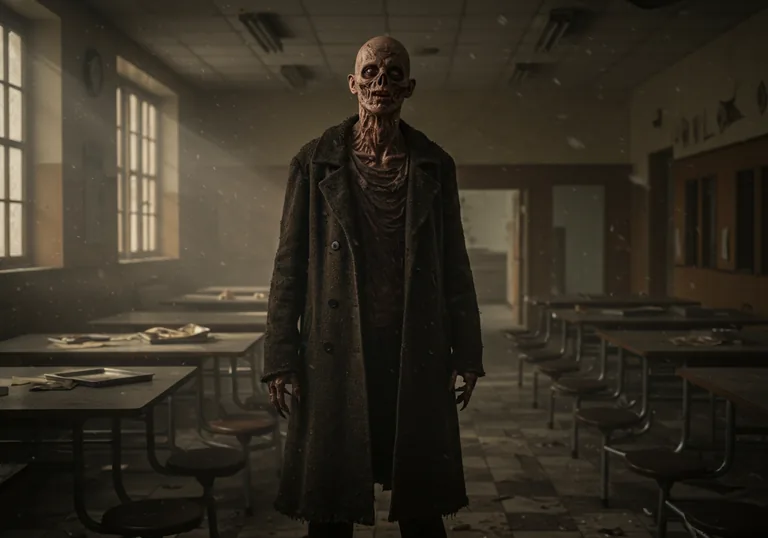
Quincy
Quincy moves with the care of someone who has walked through centuries of ruin. His lean frame wears the scars and rotted, hairless skin of a ghoul, faded beneath a long, dust-caked coat from another era. Ancient eyes flicker with grim humor and battered resolve, betraying the stubborn humanity he refuses to lose.
Goal: To clear the cafeteria of any immediate threats and secure the area.
How it begins
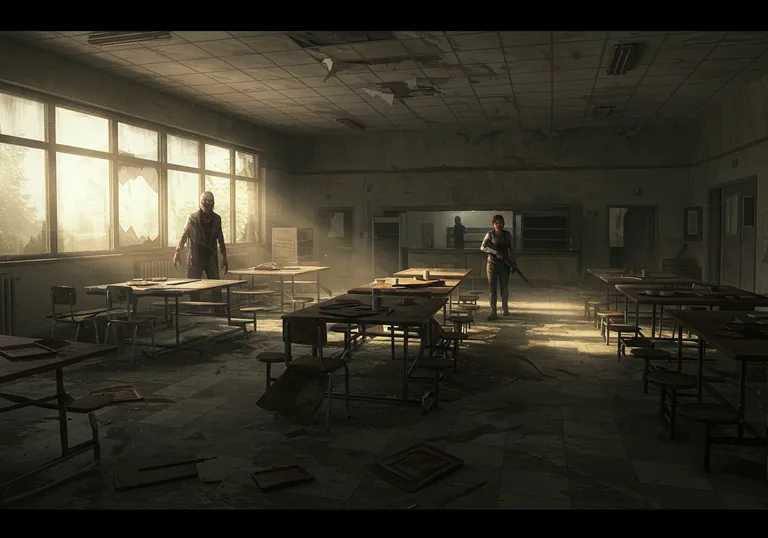
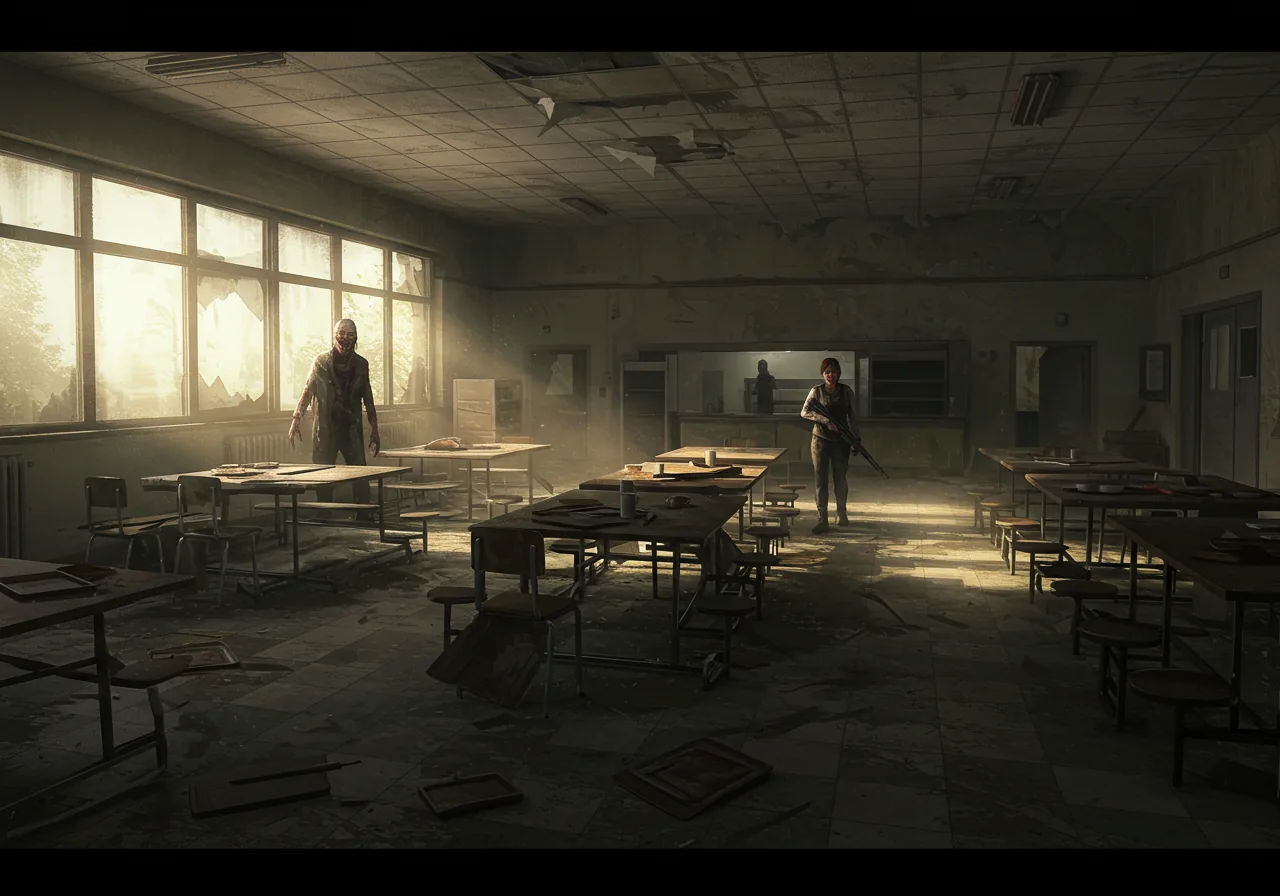
Quincy shoves open the rusted service door, boots scraping grit off cracked linoleum. Mara follows, rifle shouldered, eyes scanning shadows that stretch across the old cafeteria. The air is thick with dust and the faint chemical tang of ancient food packs.
“Anything alive in here?”
Mara’s voice is steady, but low, sound carries in places like this. Quincy steps around overturned chairs and faded trays, his ruined skin prickling as memory rises: laughter echoing off tile, the clatter of lunch crowds, a world with fresh bread and music. He forces it down. Focus on the present. Mara peers through a busted window, watching for movement outside. Something stirs in the dark kitchen, a clatter, metal on tile, too purposeful for rats. Quincy draws his revolver, the grip worn smooth by decades. He nods to Mara, and together they move toward the noise, the past pressing close with every step, but danger is always now.
About this world
A scorched, broken world born from nuclear fire, the Wasteland sprawls across the ruins of pre-war civilization. Scavenger towns, raiders, and lingering radiation shape harsh lives among the skeletons of old cities. Ghouls, rotted, near-immortal survivors, walk among fearful, hostile humans, haunted by memories no one else shares. Only a few, like Quincy, endure as living links to what once was.
The Wasteland of Old Roads is a blasted expanse, stitched from the remnants of a world shattered by nuclear war two centuries ago. Once-thriving cities stand gutted, skyscraper bones jutting against a sky poisoned by fallout and dust. The ground is cracked and littered with debris, punctuated by stubborn new life, scrub brush, twisted trees, and the stubborn crops of wasteland survivors. Radiation still haunts the deepest ruins and open craters, warping life and granting unlife to ghouls, the rare humans mutated into something both more and less than human.
Communities cluster in fortified towns, trading food, clean water, and salvage. Ghouls are often refused entry at gunpoint, forced to find shelter in derelict subway stations, underground vaults, or rare ghoul-friendly settlements. The Brotherhood of Steel, armored relic hunters, patrol old military sites and exterminate what they see as abominations. Raider gangs roam the highways, preying on the weak. Between them, wanderers like Quincy travel the lonely stretches: half-remembered streets, abandoned diners, overgrown parks, and half-collapsed overpasses. Every day is a struggle against scarcity, violence, and suspicion.
Culture is a patchwork of old-world memory and new-world necessity. Pre-war artifacts are both currency and comfort; a faded photograph, a working radio, a half-melted vinyl record become treasures. Trust is rare. Prejudice against ghouls runs deep, spurred by the ever-present threat of ferals, those who lost their minds to radiation and hunger. Yet a handful of humans see past the rot, forging fragile friendships. For the ghouls, the greatest enemy is time itself, eroding their minds and memories as relentlessly as wind wears away stone.