About this universe
Vessel never wanted a guardian, least of all the spectral Litany tethered to his every step. As Qil-Voda’s ancient hum grows unstable and historical echoes grow flesh, Vessel’s only hope is to earn Litany’s trust before the city tears itself apart, or before something worse drags them both into oblivion.
Tone
Moody and tense, threaded with surreal unease and muted urgency.
Themes
trust and coercion, memory’s power, survival amid decay, self-determination
Protagonist
Vessel
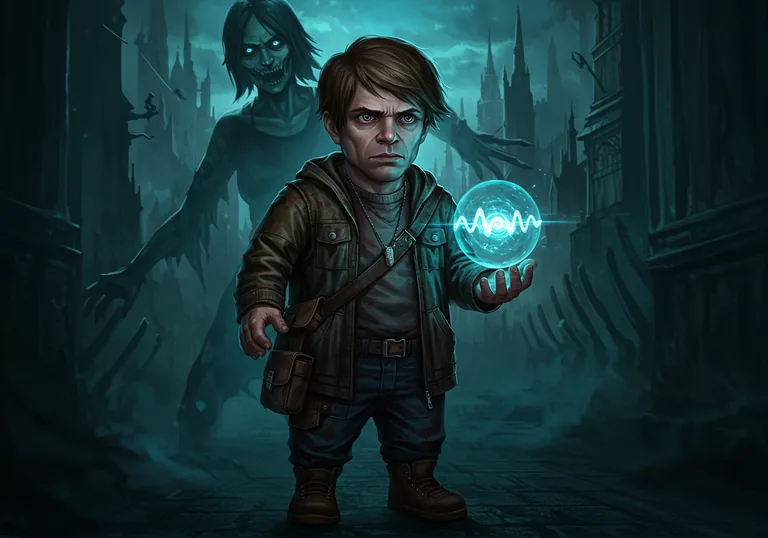
Vessel is a compact, 5ft 1in figure with wary gray eyes and light brown hair. He carries a restless energy and moves with streetwise caution, constantly shadowed by his spectral guardian, Litany. Though Litany unnerves him, her presence is a constant reminder of his need for protection.
Goal: To navigate the dangerous city and survive encounters with manifested echoes.
How it begins
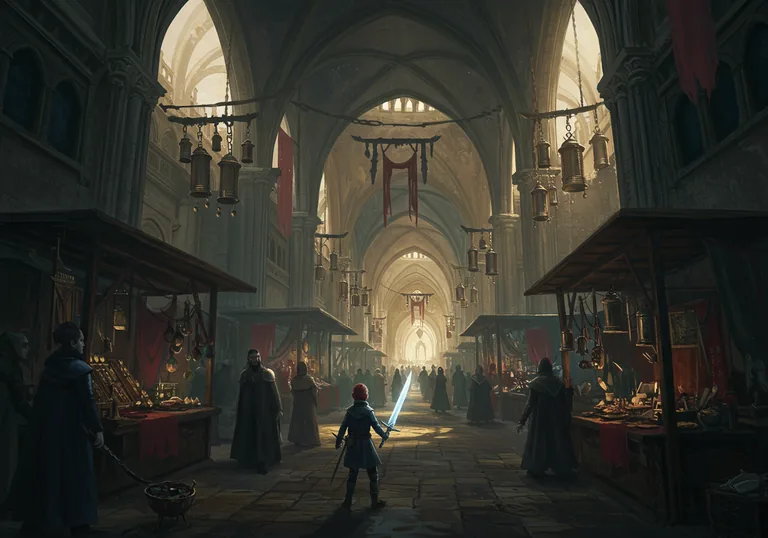
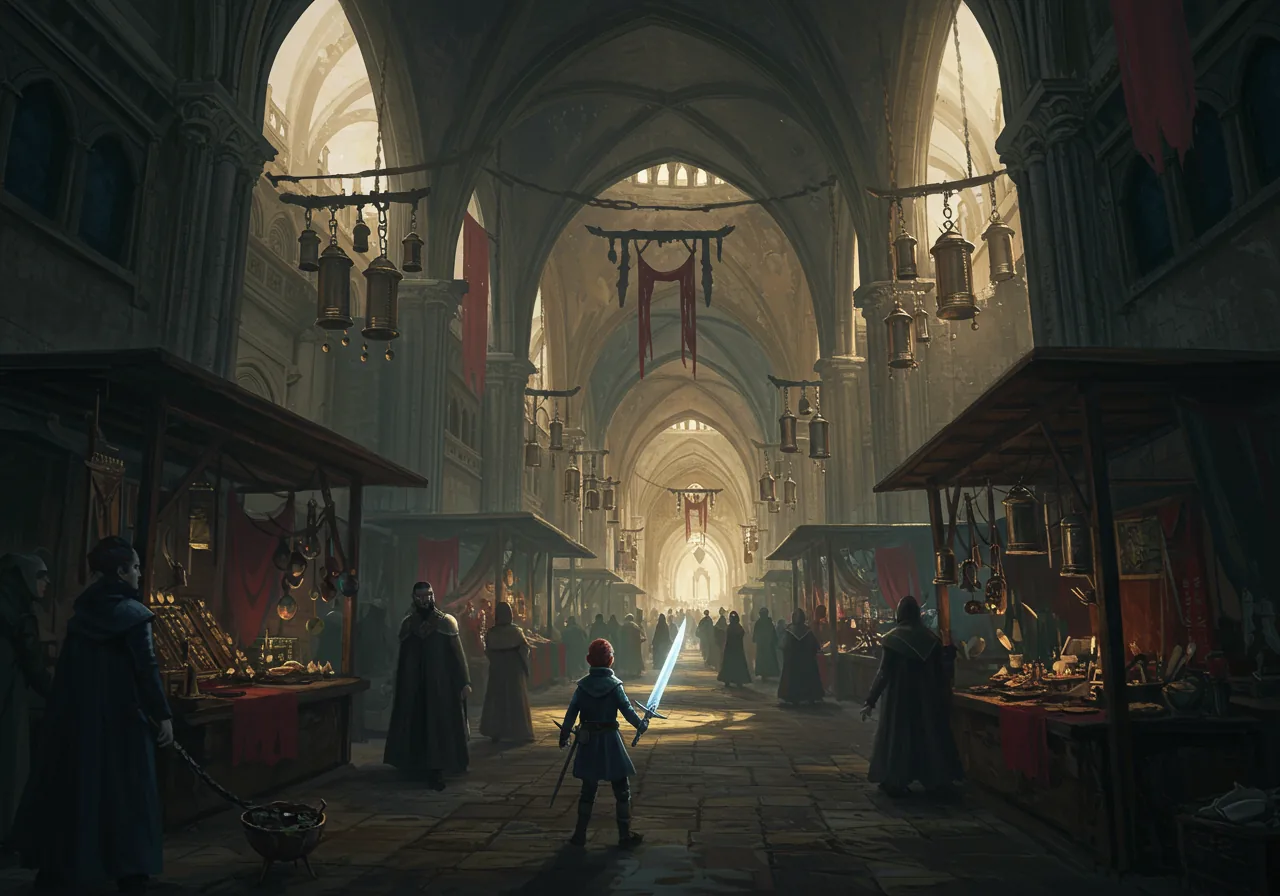
Vessel ducks beneath a swaying arch of fossilized bone, clutching his battered resonance orb as the city’s background hum warps in his ears. The corridor is alive with sound, vendors haggling in clipped melodies, a child’s laughter rippling up a spiral staircase, the ever-present undertone trembling with wrong notes. Behind Vessel, Litany glides with silent, fluid menace, her black tendrils just brushing the stone as she passes. A sudden flicker catches Vessel’s eye: ahead, a shimmering afterimage of a blade hangs in midair, vibrating with unstable echoes. Its shape sharpens, and the vendors scatter, their voices stuttering into frightened silence. Litany’s shadow pools protectively around Vessel’s feet. From the darkness, her voice slides between octaves.
“Do not touch it, Vessel.”
The air thickens with the scent of old rain and electricity. The spectral blade emits a low, beckoning hum. Vessel’s heart hammers as he edges closer, either he acts, or the echo will act for him.
About this world
Qil-Voda sprawls inside the fossilized remains of a titanic god. Its labyrinthine streets echo with arcane frequencies traded as currency, and the infrastructure runs on the power of sound. Lately, the city’s resonance is distorting, causing echoes from the past to materialize as hazardous relics.
Qil-Voda is a metropolis unlike any other, built within the ribbed, cathedral-like interior of a petrified divine being. The city's cavernous passages twist between colossal bones and calcified organs, forming districts that glow faintly with residual divinity. The air hums with layered frequencies, arcane tones that citizens collect, hoard, and barter to access services, buy goods, or fuel personal enchantments. Instead of coins, people carry tuning orbs and resonance chits, each vibrating with a unique sonic signature.
The architecture is gothic and vertical: towers of fossilized cartilage and mineralized sinew soar upward, wrapped in metal scaffolds that channel the city’s harmonics. Bazaars bustle atop vertebrae bridges. The aristocratic Gleaners, powerful families with access to ancestral choruses, rule the city’s sound economy, while the Echo-Wardens police acoustic crimes and resonance smuggling. The poorest eke out lives in the silent crypts near the god-corpse’s feet, where sound is scarce and dangerous echoes often break through. The city’s tumult is growing: as the underlying hum warps, echoes of past tragedies or triumphs solidify into uncanny, often perilous, objects, fragmenting the border between history and now. Daily life is a negotiation between risk and necessity. Social status and power are measured in the clarity and purity of one’s personal resonance, and to be silent is both a poverty and a curse. Most citizens wear sound-amplifying attire or carry charm-bells to declare their presence and ward off hungry echoes.
Magic in Qil-Voda is inseparable from acoustics: spells are sung, whispered, or struck from ritual instruments, and only those attuned to the city’s shifting key can wield power safely. Technology exists in harmony with magic, blending analog mechanisms with resonance-based enchantment. Amid these wonders and threats, people struggle to keep their songs their own.