
About this universe
Three weeks cut off from resupply, Dr. Yara Osei must hold together a unraveling team while the station’s biota displays alarming, almost intelligent behaviors. As stress fractures the crew and the planet’s life forms grow ever more responsive, Yara must choose between trust, paranoia, and the possibility that Lumeis itself is watching.
Tone
Claustrophobic and tense, with creeping dread and flashes of scientific awe.
Themes
isolation vs. connection, perception vs. reality, trust under pressure, the observer effect
Protagonist
Dr. Yara Osei
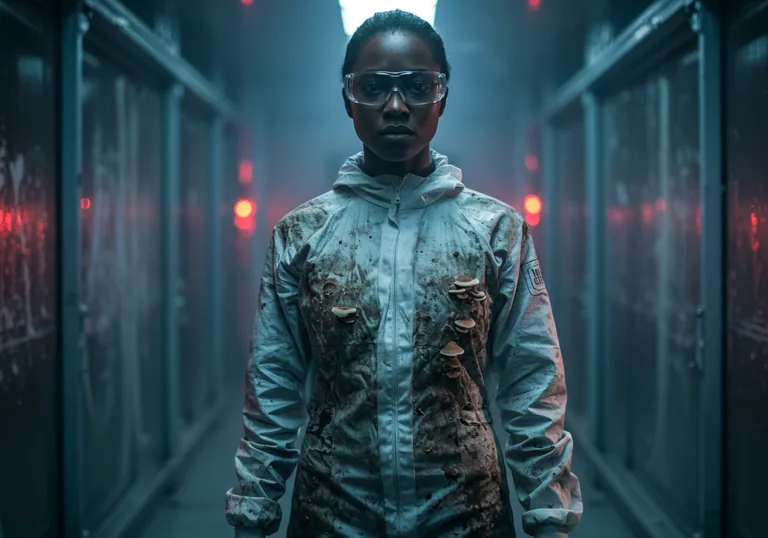
Yara Osei radiates quiet resolve beneath exhaustion. Lean and sharp-eyed, with close-cropped hair and dark skin, she wears a patched research suit stained with soil and fungal dust. Her movements are efficient, her gaze always alert, betraying both scientific curiosity and mounting unease.
Goal: Stabilize the station and understand the anomaly
How it begins
Dr. Yara Osei tightened her grip on the handheld sampler as the warning klaxon echoed down the corridor. She hurried past the hydroponics bay, boots thudding on metal grating, her breath fogging in the corridor’s chill. Through the observation window, she caught sight of the lichen patch, once pale green, now pulsing vivid red in time with the lights. The flicker set her nerves on edge. Behind her, someone slammed a locker door. Yara didn’t flinch; she’d learned not to react. In the comms room, the radio hissed with static and a faint, rhythmic clicking, new, not the usual interference. She set down her kit, eyeing the biometric readouts on the wall: heart rate spikes, rising CO2. The air felt heavy.
"I’m logging a field anomaly,"
Yara called out, voice steady. No answer. The station groaned under a gust of wind, darkness pressing at the windows. Outside, in the twilight, something moved across the frost; the sensor grid pinged with irregular motion.
About this world
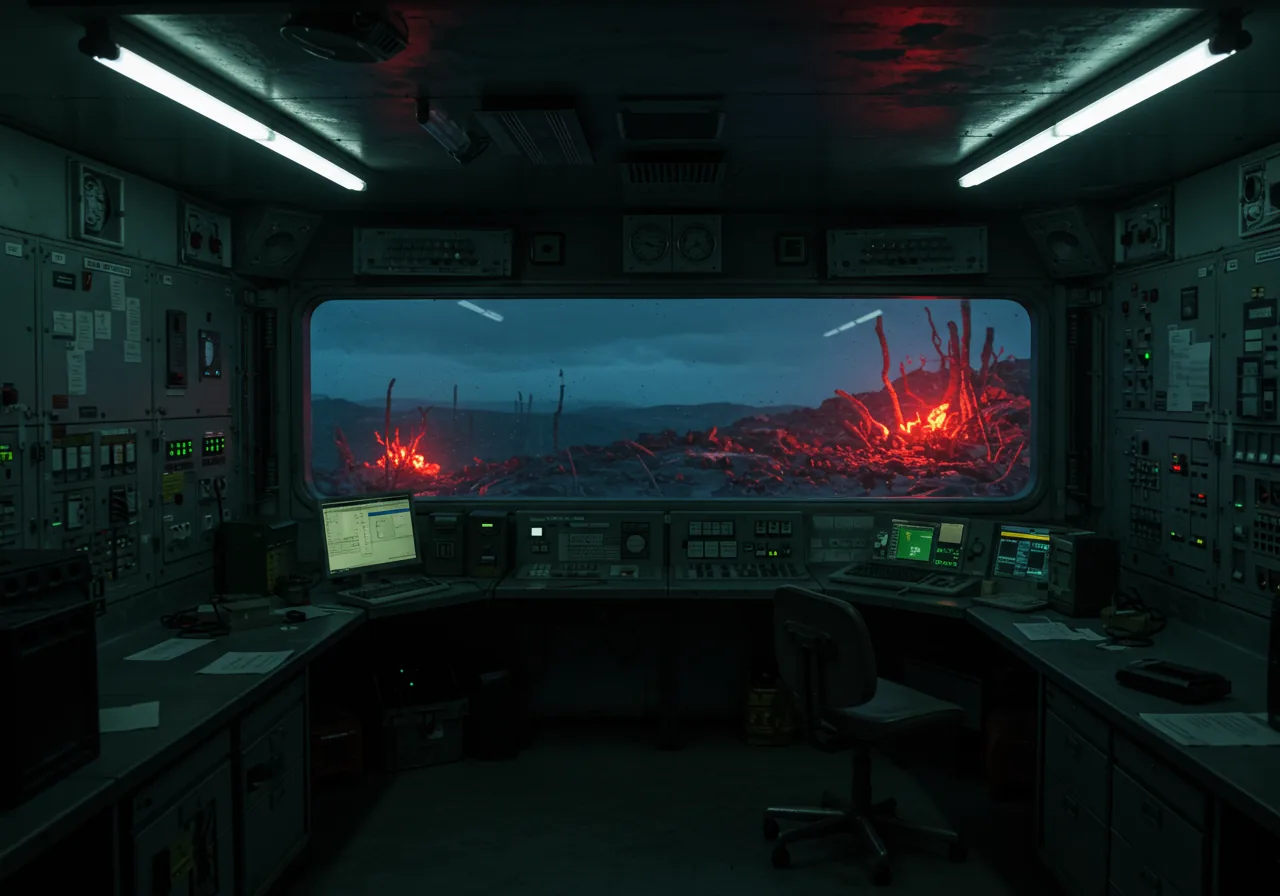
Lumeis is a tidally locked planet, split into endless scorched day and perpetual frozen night. The research station perches precariously along the narrow twilight band where strange, adaptive life forms thrive. Now, with no way to leave and supply ships gone silent, tensions mount among the six scientists.
Lumeis orbits a distant red dwarf, held in a tidal lock so that one hemisphere bakes under relentless sunlight while the other languishes in eternal darkness. Between these extremes runs a slim, habitable band called the Terminator, a realm of perpetual dusk and rapid temperature gradients. Here, life has evolved in extraordinary forms, fungal forests that shift their pigment with the dimming sky, burrowing predators surfacing in the cooler hours, and phosphorescent colonies pulsing with eerie coordination. The research station sits half-buried in permafrost and battered by winds that howl from the night side, its windows looking out on shadowy, shifting terrain. Socially, the crew of six scientists is isolated by distance and now, abandonment; their support from orbit has evaporated without warning. Power is rationed, food is dwindling, and routine is enforced more by necessity than discipline. The chain of command is informal, with each researcher fiercely protective of their specialty. Psychological strain is mounting, as the environment outside grows more unpredictable and the biosphere’s organisms begin to act in ways that suggest a new, disturbing awareness of the humans in their midst. The history of the station is brief, constructed only five years ago, but its sense of foreboding and claustrophobia feels ancient. Outside, the perpetual dusk hides secrets that seem to bleed into the minds of those inside, blurring the line between subject and observer.
Timelines 2
See all 2 →
+1 private timelines